
Carpet is one of those things you stop noticing until it looks tired, smells a little off, or a guest points it out. By then it has usually had months of grit walked into it. The question we hear most is a fair one: how often should you clean carpets, and does the method really matter? The short version is that frequency depends on your household, and the method matters more than most people think. A vacuum and a supermarket hire machine are not the same as a professional clean, and the reasons are easy enough to explain.
What follows is based on what we actually see in New Zealand homes, not a manufacturer's brochure.
Vacuum weekly, deal with spills straight away, and book a thorough professional clean roughly once a year. Busy homes with pets and kids may want it more often, and a quiet, shoes-off household can usually stretch it longer. The vacuum keeps the surface tidy. It's the deeper clean that lifts the ground-in grit a vacuum leaves behind.
How often should you clean carpets?
There's no single number that fits every home, but there are sensible defaults. For most households, a thorough professional clean about once a year keeps carpet healthy and stops soil building up to the point where it's hard to shift. That suits a tidy home with normal foot traffic.
A few things push that frequency up:
- Pets. Hair works into the pile, and odour settles below the surface, often into the underlay. Pet homes tend to want a clean every six to twelve months, for the smell as much as the look.
- Young children. Food, drinks, craft disasters and a lot of floor time mean more spills, more often.
- Heavy traffic and shoes indoors. Hallways, stairs and the route from the door to the kitchen wear first, and you'll often see darker lanes where everyone walks. Keeping shoes at the door slows this down more than anything else you can do.
- Allergies or asthma. Carpet holds dust and allergens, so if someone in the house reacts to dust, more frequent cleaning and regular vacuuming with a good filter genuinely help.
On the other side, a low-traffic home with no pets, no small children and shoes off at the door can often go well beyond a year between cleans. We would rather say that than sell you a clean you don't need. In a home like that, vacuuming and quick spot cleaning do most of the work.
If you're working out where carpet fits in your wider routine, our guide on regular vs deep cleaning covers how everyday upkeep and the occasional deeper clean fit together.
Why a vacuum can only do so much
Vacuuming matters. It's the single most useful thing you can do for your carpet, and doing it weekly, more often in the busy areas, clears the loose dust, hair and crumbs before they get trodden in.
What a vacuum can't do is lift the fine, abrasive grit that has already worked its way down to the base of the pile. That grit is the real problem. Every footstep grinds it against the fibres like sandpaper, dulling and wearing the carpet far faster than normal use would. You can't see it, and you can't vacuum it out once it's down there. People are often surprised by this: the carpet looks vacuumed, but the wear is happening below the surface. A proper clean flushes that grit out, along with the oils and residue that leave carpet flat and grey in the high-traffic spots.
What actually works: the main methods
The method makes a real difference to how clean the carpet gets and how long it takes to dry.
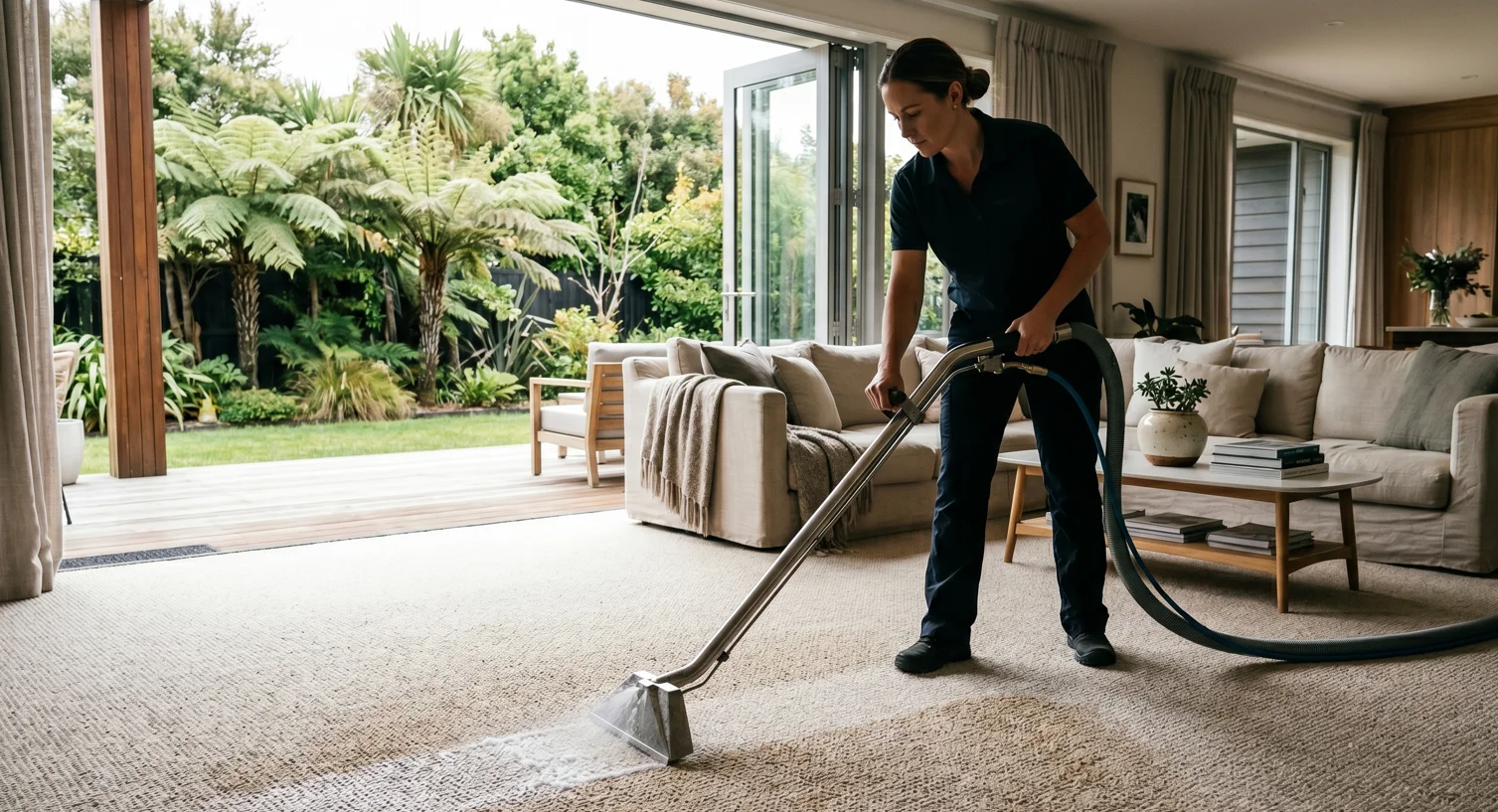
Hot-water extraction (often called steam cleaning) is one of the most widely used methods for a proper carpet clean, and the one we use. Hot water and cleaning solution are worked into the carpet, then immediately drawn back out under strong suction, carrying the loosened soil with it. With the right equipment it reaches deep into the pile and pulls the dirty water back out rather than leaving it behind, which makes it the most thorough option for ground-in soil and odour. You can read how we do hot-water extraction on our carpet page.
Low-moisture and dry methods (encapsulation, dry compound) use little or no water. A compound is worked through the carpet to trap soil, then vacuumed out. They dry fast and suit light maintenance or places that can't be out of action, but they don't pull out deep soil the way extraction does, so they work better as a top-up than a deep clean.
Bonnet or rotary cleaning runs a pad over dampened carpet. It can brighten the surface quickly, but it mostly cleans the top of the pile, so it's more of a freshen-up than a deep clean.
For most homes booking an occasional thorough clean, hot-water extraction is the one that does the job properly. The trade-off is drying time.
How long carpets take to dry
This is the question people forget to ask until they're tiptoeing around a damp room. After hot-water extraction, carpet is usually touch-dry within a few hours and fully dry in about four to eight hours when conditions are good. In a cold, still, humid room, a closed-up lounge in a New Zealand winter, for example, it can take the better part of a day.
Airflow, ventilation and a bit of warmth all speed it up. Open windows, run a fan, or put the heat pump on fan mode, and keep people and furniture off the carpet until it's dry.
Drying time is also why over-wetting is a problem, and it's the most common fault we see with cheaper cleaning. If too much water goes in and not enough comes back out, the carpet stays wet for a long time. That invites a musty smell, mould or mildew underneath, and watermarks as old stains wick up to the surface while it dries. A good clean is as much about how much water is pulled back out as how much goes in.
Professional clean vs DIY hire machine
The machines you can rent from a supermarket or hardware store are genuinely useful for some jobs, so this isn't a simple "ours is better" pitch. It just helps to know what you're getting.
Hire machines have far less suction and heat than professional gear. They lay water down well enough, but they don't pull much of it back out. So the carpet gets wetter and stays wet longer, and more soil and detergent are left behind. Leftover detergent is sticky, which is why carpet cleaned this way often gets dirty again quickly as the residue attracts new soil. Used carefully on a small area with a light touch on the water, a hire machine can refresh a room. Used heavily across a whole house, it's easy to over-wet and end up worse off.
A professional carpet clean uses much stronger heat and extraction, so it cleans deeper, rinses the cleaning solution out, and dries faster. On a tired, heavily soiled or odour-affected carpet, that difference is significant.
Here's the honest position, though. You don't need to call in the professionals every few months. For a well-kept home, regular vacuuming and prompt spot cleaning handle the day to day, and a thorough clean once a year or so resets what the maintenance can't reach. Put your effort into the vacuuming and the quick spill response, and let the deeper clean handle what regular upkeep can't reach.
A note on pet odour
Pet smells deserve a mention because they behave differently to dirt. Odour from accidents doesn't just sit on the fibre; it soaks through into the backing and underlay, sometimes the subfloor. Surface cleaning makes it smell better for a day or two, then it returns, because the source underneath was never dealt with. Hot-water extraction with the right treatment lifts a lot of pet odour, especially when it's caught early. Deep or long-standing contamination is harder, and in bad cases the underlay may need replacing to clear it fully. A smell that keeps coming back after cleaning is usually the sign it has gone deeper than the carpet itself.
Vacuum often, treat spills fast, and give it a proper clean when it needs one. If your carpets are due, you can see a fixed price for a professional clean online in under a minute on our pricing page.