You move the couch and find a thin patch of carpet, a few brown husks and a small hairy grub. It's easy to call it carpet moths and start looking for a spray. But if you want to know how to get rid of carpet beetles, start by identifying the insect and finding the carpets, rugs or fabrics the larvae are eating. Cleaning the visible damage alone can miss larvae elsewhere in the room.
Here's the short version, then the detail.
Identify the insect, find affected material and clean the surrounding hiding places. Vacuum the edges and furniture crevices, deal with fabrics according to their care labels and remove material that can't be saved. If live larvae or new damage continue, get a pest controller to investigate. A carpet clean can be useful, but it isn't a promise that every source has been removed.
What carpet beetles look like in NZ
The adult and the larva don't look alike. Manaaki Whenua's NZ identification guide describes the adult varied carpet beetle as a small beetle, about 2–3mm long. Its larvae damage wool, carpet, leather and sheepskin; the adults feed on nectar and pollen. That's why identifying a beetle on the windowsill isn't the same job as finding the material being damaged.
Hairy larvae are often called woolly bears. You may also find their cast skins. The Natural History Museum's identification photos show adults and larvae side by side. Use them as a starting point, not a reason to name the exact species from a blurry phone photo. If the identification isn't clear, keep a sharp photo or a specimen for someone qualified to check.
Carpet beetles versus carpet moths
They cause a similar problem, but they're different insects. The Natural History Museum's damage guide explains that clothes moth infestations usually leave silk webbing, while carpet beetle damage doesn't. Carpet beetle larvae are hairy grubs. Don't identify the pest from the damaged carpet alone.
Don't try to settle it from a bald patch alone. Look for the insect, skins, webbing or cases as well. Our guide to getting rid of carpet moths covers the moth-specific details and what a clothes moth trap can tell you. The useful overlap is thorough inspection and cleaning. The important difference is knowing which insect you're monitoring.
Where carpet beetle larvae hide
Start with the affected item, then widen the search. The University of California's carpet-beetle guidance describes food sources beyond carpet, including animal fibres and accumulations of hair, lint or dead insects. Cleaning the visible patch while leaving the source nearby can leave the real job unfinished.
Carpet beetle larvae favour dark, undisturbed places. The National Pesticide Information Center recommends checking under furniture and inside wardrobes. Look under couches and beds, behind heavy furniture and along carpet edges. Check stored wool blankets, clothing and rugs too. Look for live larvae, shed skins and fresh damage, rather than only the patch you first noticed.
For a practical inspection, make a short room-by-room list:
- Carpet and rugs: check edges and the parts hidden by furniture, then inspect both sides of movable rugs.
- Stored wool: check the spare blankets, winter jerseys and rolled rugs, rather than just the wardrobe in the affected room.
- Upholstery: inspect seams and underneath removable cushions. Our fabric couch cleaning guide explains care-label checks before wet cleaning.
- Hard-to-reach places: tell a professional about activity near a wall opening or another area you can't safely inspect. Don't dismantle the room to follow a guess.
A common mistake is cleaning only the damaged patch. Carpet beetle larvae can also hide under couches, inside wardrobes and along carpet edges, so check and clean those areas too. First identify the insect and find which carpets, rugs or fabrics the larvae are eating.
How to get rid of carpet beetles
Work through the affected items as well as the room. Keep a simple list of what you've checked, cleaned and set aside. That makes the next inspection useful instead of starting from memory.
- Find the source before cleaning the whole room. Check where you found activity, then look through nearby wool rugs, carpet edges, stored fabrics and furniture crevices. Separate suspect items for inspection instead of moving them into another wardrobe. Take a clear photo of the insect or shed skin if you need help identifying it.
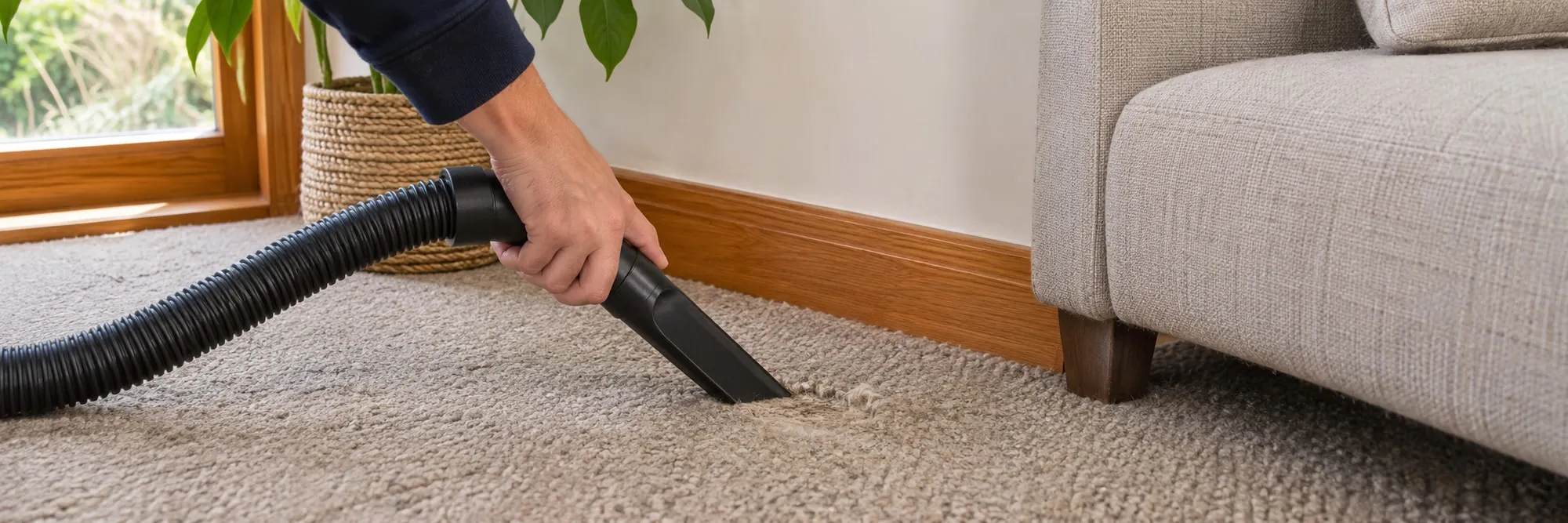
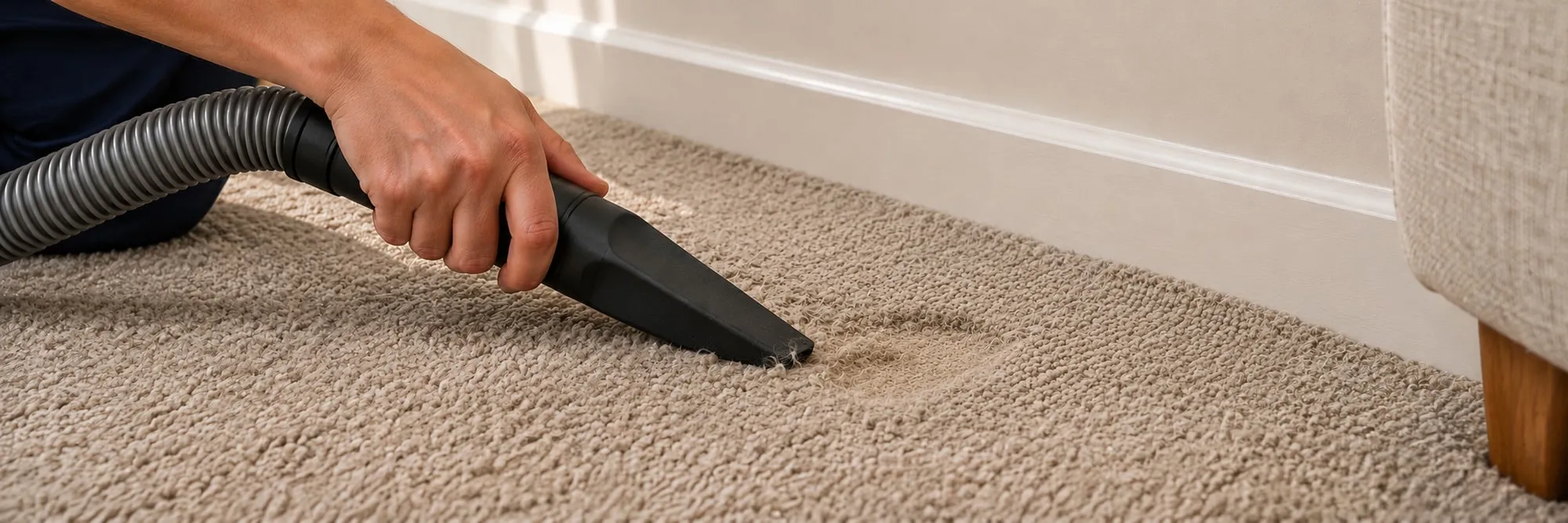
- Vacuum the places the normal pass misses. Use the appropriate attachment along skirting boards, underneath furniture and in upholstery seams. Clear accumulated lint, hair and dead insects as well as the visible carpet pile. Move only furniture you can handle safely, and tell the cleaner or pest controller about anything you can't reach.
- Deal with affected fabrics separately. Follow the care label. A hot wash that suits one item may damage a wool rug or jersey, so ask a suitable dry cleaner about delicate pieces. Keep cleaned, pest-free items apart from anything still waiting to be checked.
- Remove material that can't reasonably be saved. Some badly infested items may need to go. Bag anything you're discarding before carrying it through the house, and avoid leaving a suspect rug rolled up in another room. If you're unsure about an expensive or sentimental piece, get advice before throwing it away.
- Recheck and escalate if activity continues. Make a note of where you found larvae or damage so you can inspect the same places again. Look for fresh evidence rather than expecting old carpet damage to disappear. Continuing live larvae, new damage or a source you can't locate is a reason to call a pest controller.
If you're considering a pesticide, use only a product whose NZ label covers the pest and the intended surface, and follow that label. This guide isn't a substitute for product directions. Don't apply an overseas article's named product or dose to a New Zealand home.
Where carpet cleaning helps
We can help with professional carpet cleaning, but we won't sell it as guaranteed carpet beetle treatment. A clean can leave the carpet fresher; it can't replace identifying an infested item elsewhere in the house. If that distinction changes what you book, it's worth making before the appointment.
Tell us what you've found and whether a pest controller is involved. If treatment is planned or has already happened, agree the order and timing with that provider. You don't need to book a second service simply because the first article you read recommends one.
There's a useful difference between the cleaning guarantee and the result you're hoping for. We guarantee our clean, not an insect-free home. If the main concern is ongoing live larvae, pest identification and control should guide the next step.
Keeping carpet beetles from coming back
Once affected material has been dealt with, make the inspection part of the routine rather than waiting for another patch. Keep pest-free wool items clean and sealed when they're stored. Check window screens and obvious gaps, and inspect flowers brought indoors. These are among the prevention measures in the University of California guidance.
Our guide to how often carpets need cleaning can help you plan the cleaning side. Keep pest checks as a separate task: note any fresh skins, larvae or damage, and photograph the same spot so you're comparing like with like.
Clothes moth pheromone traps target particular moths. Don't assume a trap sold for clothes moths will monitor carpet beetles. An empty trap is one observation, not proof that the carpet and stored fabrics are clear.
Do carpet beetles bite?
Texas A&M AgriLife Extension explains that carpet beetles don't bite, but the hairs on larvae can irritate some people. That distinction matters when you're searching for “carpet beetle bites”. Skin marks alone aren't proof of a carpet beetle problem. Get advice about persistent or concerning symptoms, and base pest treatment on identifying the pest.
When to call a pest controller
Get help if you can't identify what you've found, can't locate the source, or keep finding live larvae or fresh damage after cleaning. Make the call more useful with clear photos, the rooms affected, and a note of what you've already done. There's no need to turn that into a long report.
Before booking, ask what the inspection covers, which insect they think is involved, and what you should do with rugs, clothing and furniture. Ask when to clean and what follow-up is included. A clear plan gives you something better to work from than a promise that one visit will sort every possible carpet pest.