
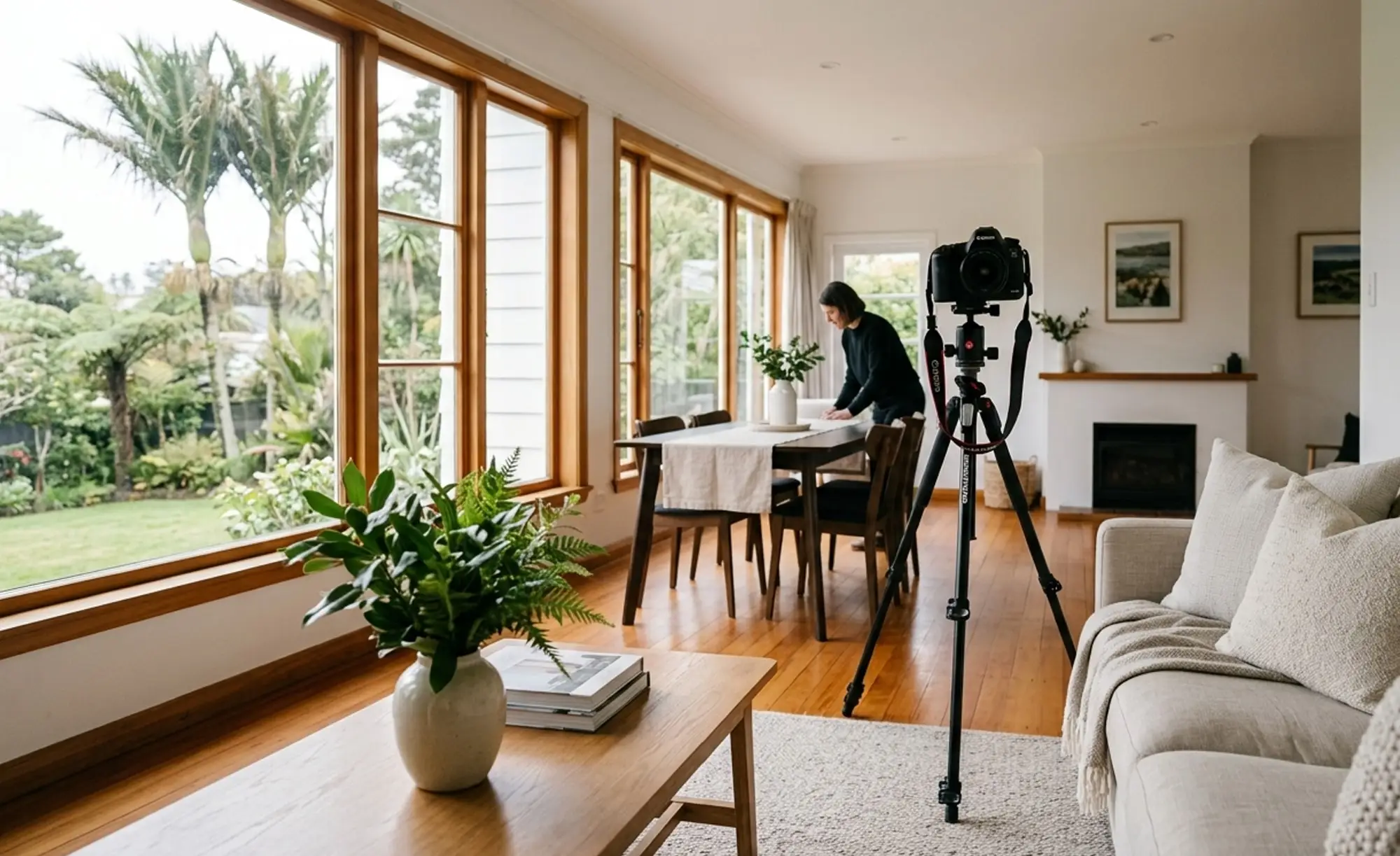
Most people clean their house for the open home. That's the wrong deadline. By the time the first buyers walk through, the photographs have already been taken, uploaded and pushed out to every listing site, and those photos have been doing the selling for a week or more. We've turned up to plenty of pre-sale cleans where the house looked wonderful on the Saturday, and the photos it was still being advertised with were shot before anyone thought about cleaning. So if you're thinking about cleaning your house before selling, the real question isn't how hard to clean. It's when.
Here's the short version, then the detail.
Clean before the photographer, not before the first open home. The photos are shot early and they're what most buyers see first, so a house cleaned the night before the viewing has already made its first impression. Aim at what a camera and a stranger notice: glass, floors, benches, smell, and the outside of the house. Clear clutter harder than feels necessary, since empty space photographs as space. Then keep it show-ready with a light reset before each viewing rather than paying for a full clean every week.
Clean for the camera, not the open home
A marketing campaign runs for a few weeks, and the photographs are usually taken right at the start of it. Everything after that, the listing, the social posts, the flyer in the letterbox, is built on the images from that one morning. So the single highest-value clean you'll do is the one that happens before the photographer arrives, not the one before the first viewing.
This is the most common mistake we see on pre-sale jobs, and it's an expensive one, because it isn't fixable later without paying to reshoot. Book the clean for the days before the shoot. If the photos are already done and you weren't happy with the state of the house, talk to your agent about a reshoot before you spend money making the house perfect for twelve people on a Saturday when three thousand have already scrolled past the photos.
A camera is also less forgiving than a person. It picks up smears on glass, dust on a dark benchtop, a cloudy shower screen, marks on skirting boards, and the tide line on a stainless steel sink. Things your eye edits out at home show up clearly in a wide-angle shot with the light behind them. That's a big part of what a pre-sale clean is actually for.
What buyers actually notice
Buyers don't walk through with a checklist. They form an impression in the first minute and then spend the rest of the viewing confirming it. A few things carry most of that weight.
Light. Clean glass makes a room look bigger and brighter, and dirty glass dulls everything behind it. Windows are the highest-return thing on this whole list, inside and out, and they're the one job most sellers skip. If you've got height or a lot of joinery, this is where professional window cleaning earns its keep. If you're doing it yourself, our streak-free windows guide covers the method and the mistakes.
Smell. It lands before anyone has consciously registered it, and it's the one thing you can't judge in your own house. There's more on it below.
The kitchen and the bathrooms. These are the two rooms buyers judge hardest, and the two that suggest how the rest of the house has been looked after. A limescaled shower screen and a greasy rangehood say "deferred maintenance" whether or not that's fair.
Floors. Wall-to-wall clean floor reads as a cared-for house. Traffic lanes worn dark down a hallway read as the opposite.
Space. Half of what people call cleaning here is actually clearing. Benches, windowsills, the top of the fridge, the corner of every room. A cleared room photographs as a larger room, and it lets the cleaning actually reach the surfaces.
The room-by-room checklist
Work top to bottom in each room, dust and cobwebs first, floors last, so you're not re-cleaning as you go. Do the clearing before any of it.
Kitchen
- Benches and splashback wiped down
- Sink and taps cleaned and descaled
- Inside and outside of cupboards and drawers
- Oven cleaned, including the door glass
- Rangehood and its filter degreased
- Cooktop, including under removable parts
- Inside the fridge
- Floor washed, including under the kickboards
Buyers open the oven and the pantry. Assume everything gets opened.
Bathrooms & toilet
- Shower glass, tiles and grout
- Bath, basin and taps cleaned and descaled
- Mirror and any glass shelving
- Toilet, including the base and behind it
- Extractor fan cover wiped
- Mould on grout or silicone treated, not just wiped over
Living areas & bedrooms
- Inside wardrobes, shelves and rails
- Light fittings and switches
- Skirting boards, door frames and handles
- Window sills and tracks
- Marks on walls spot-cleaned
Storage is something buyers actively check, so the inside of a wardrobe matters more than it feels like it should.
Glass & joinery
- Interior and exterior glass
- Mirrors
- Sliding door tracks vacuumed, then wiped
- The frames and seals themselves
Floors
- Carpets vacuumed thoroughly
- Carpets cleaned if the traffic lanes have gone grey
- Hard floors washed
- Rugs aired
Outside
- Lawns mown and edged
- Gardens and paths weeded
- Letterbox and front door cleaned
- Cobwebs cleared from the eaves and porch
- Deck and paths washed
- Bins moved out of shot
The first ten seconds happen before anyone gets through the door.
Smell, damp and the window seals
You can't smell your own house. Nobody can. It's the single blindest spot in the whole process, and it's worth asking someone who doesn't live there to walk in cold and tell you honestly what they notice at the door.
The usual sources are pets, damp, bins, drains, old carpet and last night's cooking. Fix the source rather than covering it. Heavy air freshener or a scented candle burning in an empty house is its own signal, and buyers read it, fairly or not, as something being hidden. Airing the house out properly before a viewing beats any product.
The New Zealand-specific one is condensation. Black mould collects in the bottom channel of aluminium joinery and along the rubber seals, and in a cold, closed-up house shown in winter, the whole place can smell musty by mid-morning. Buyers here are alert to damp, and mould on the window seals is one of the first things a careful one looks for.
Mould in the window channels is read as evidence about the house, not about the cleaning. Scrub the channels and seals, clear the little drainage holes along the bottom of the frame so water stops sitting there, and open the place up well before anyone arrives. Wiping the sills dry on cold mornings during the campaign keeps it from coming back.
What's not worth your money
Some of this list is genuinely optional, and it's worth saying so plainly.
A second full clean before every open home. One proper clean before the photos, then a light reset before each viewing, is enough for most houses. Paying for a full clean weekly through a campaign is overspending.
Professional carpet cleaning on carpet that's only lightly used. If the traffic lanes have gone grey or there's pet odour, clean them, it'll show in the photos. If the carpet is in good shape, a thorough vacuum is often all it needs. Our carpet cleaning guide covers how to tell the difference.
A full clean at all, if you're already on top of it. If you've got a regular cleaner and the house is genuinely well maintained, you may not need a separate pre-sale clean. Put the money into the windows and the carpets instead, because those are the two things a camera notices and a regular clean doesn't cover.
Cleaning doesn't add a number to your sale price, and anybody who quotes you a percentage uplift for it is guessing. We're not going to quote one either. What a clean does is remove reasons to hesitate, and make a well-presented house look like one that has been looked after. That's worth doing. It isn't the same as adding value, and a clean house won't rescue a price the market disagrees with.
When to clean before selling
The order matters more than the effort.
- Declutter and depersonalise first. Before any cleaning. A cleaner can only clean what they can reach, and this is the step that makes the rooms photograph larger. Our guide on prepping before the cleaners arrive is the same principle applied to a normal clean.
- Book the clean for the two or three days before the photos. Close enough that it still looks fresh, far enough out that you're not doing it the same morning.
- Shoot the photos. Then keep the house in roughly that state.
- Light reset before each viewing. Twenty minutes. Benches clear, floors done, bathrooms wiped, bins out, windows opened, lights on.
- One more clean before settlement if you've agreed to leave it tidy. Check what your sale agreement actually says.
If you'd rather hand the first one over, a clean timed around your photos and open homes is scoped for exactly this: the detail work a camera picks up, done before the shoot.
Benches and the sink clear and dry. Floors vacuumed or swept. Bathrooms wiped and towels straightened. Bins out of sight. Windows open for twenty minutes, then lights on and curtains back. That's the whole pre-viewing routine, and it takes about as long as a coffee.